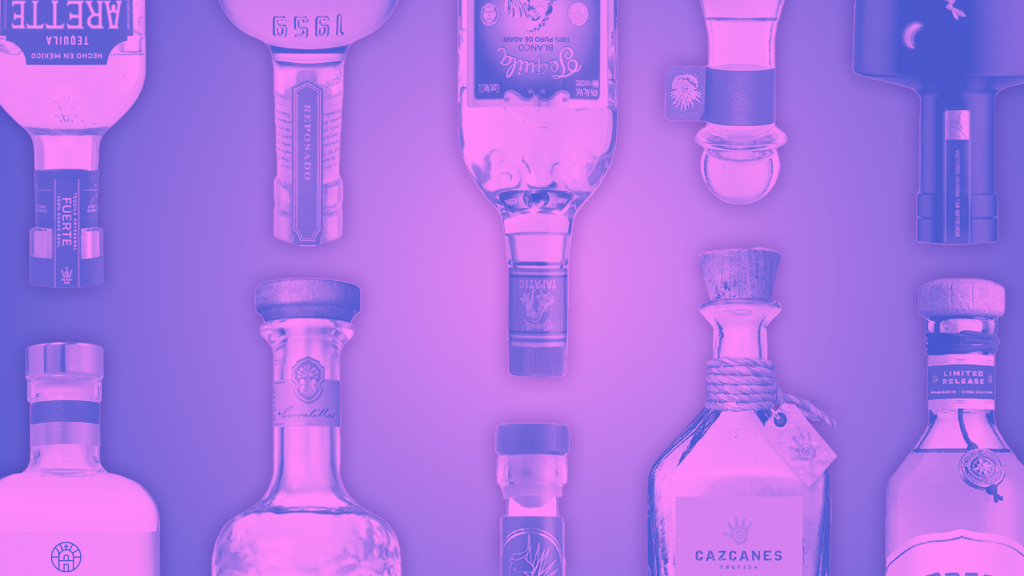
Tequila continues to defy the odds. At a time when other categories like bourbon and gin flounder in the current morass of tariffs and other economic woes, the spirit continues to thrive. Its success in a down market reflects our more than two-decades-long fascination with all things agave. According to a report furnished by the Distilled Spirits Council (DISCUS), tequila and mezcal volumes grew a whopping 301 percent from 2003 to 2025.
How the tequila boom is sustaining itself is somewhat unique. Heavyweights like Jose Cuervo, Patrón, Casamigos, and Don Julio still dominate sales, but the craft sector is making gains. Data shows a 1.5 percent decline in sales among mass-market brands in 2025, while sales for craft tequila brands jumped 28.5 percent.
One of the reasons behind this trajectory may be the proliferation of newer labels and smaller long- established brands on the market, most of which exist with comparatively little fanfare. These bottles do more than offer tequila aficionados the chance to try something new. They’re also additional conduits to convey tequila’s story, from the spirit’s rich history to the intricacies of its production. The more bottles you try, the more enhanced the story becomes.
To get you started on your journey, we’ve whittled the vast market down to 10 lesser-known producers to try when you’re ready to move beyond the familiar brands. You’ll see some recurring motifs within these bottles, from the promotion of terroir in tequila to the rejection of additives. You’ll also see elements that make them stand out on their own, making each brand intriguing enough to check out at least once.
Lalo
If you’re not familiar with Lalo yet, you likely will be very soon. Vodka behemoth Tito’s purchased the Austin-based tequila brand co-founded by Don Julio González’s grandson Eduardo “Lalo” González in 2025, giving it massive potential to raise its national profile in the process. Before you start freaking out about the juice’s quality dropping post-acquisition, don’t fret too much. Lalo is still the same highly acclaimed juice it’s been since its 2020 debut; made with matured agave from the Jalisco highlands, mineral-rich well water from Jalisco, and Champagne yeast without any additives. Lalo joining forces with Tito’s will likely just make it easier to pick up a bottle, which would make it a great entry point to further burrow into the category.
Tequila Ocho
Terroir exists in tequila. Proving this was Tequila Ocho’s core objective when legendary tequilero Carlos Camarena and the late European tequila evangelist Tomas Estas launched the brand in 2008. It’s been increasingly tough to argue against this goal with each release. There are no guardrails in place to steer the tequilas toward an exact flavor profile. They simply harvest overripe agave from Los Altos de Jalisco, Michoacán, and Guanajuato and let the land’s influence on the plant speak for itself. The results are similar to wine: Tequila Ocho’s aromas and flavors change subtly each year — just enough for discussions about favorite harvests to occur among tequila enthusiasts. These nuances may take some time and experience to fully detect, but Ocho’s high quality makes developing your palate to pick them out a delightful exercise.
G4
Founded in 2011, G4 may be the purest example of the scientific influence of tequila production. Master distiller Felipe Camarena — Carlos’s brother — produces his tequilas with a focus on blending traditional methods and envelope-pushing modern innovation. Like his hermano, Felipe uses G4 to explore the concept of terroir in tequila. At the same time, he uses techniques like fermenting agave in a mix of pine wood and stainless steel tanks and blending mountain spring water and captured rainwater to bring his tequilas to life. The tequila’s base itself stems from family tradition: Felipe utilizes an agave yeast strain initially concocted by his grandfather, Don Felipe Camarena, in the tequila-making process. The result of this voodoo is a terrific tequila that doesn’t need a fancy bottle or a slick ad campaign to capture the attention of tequila lovers.
Cazcanes
Since hitting the market in 2017, Cazcanes has been aggressively pushing back on the notion that tequila is strictly a poor person’s spirit. The Los Angeles-based company doesn’t use luxury-tinged marketing blitzes or ornate bottles that can vaguely pass as vases to get this point across. They let their juice and its associative price point do the talking. Judging by the accolades the brand’s received over the years, what the liquid has to say justifies the price point, which typically ranges between $70 and $200 depending on the expression. Created in the tiny town of Amatitán, Jalisco, Cazcanes’s distillation process involves cooking the agave via an autoclave for 24 hours, a method comparable to preparing food in a pressure cooker. It doesn’t involve the inclusion of additives. It also doesn’t include the constraints of time in some cases — the distillery blends the tequilas for its aged expressions only when the team feels the barrels have finished imparting their influence. Its efforts yield sophisticated tequilas that obliterate unfair tequila stereotypes.
El Tesoro
The Camarena family name pops up a lot on this list, and it can get a little confusing at times. Case in point: El Tesoro, one of the agave world’s most notable family affairs. While the brand’s only been around since 2011, the Camarena brood’s heritage extends well before its launch date. The juice gets distilled at La Alteña, a distillery Don Felipe Camarena established in 1937. His grandson Carlos — the same mind behind Tequila Ocho — was the brand’s master distiller and CEO from its launch until 2025. He then handed both duties over to his kid sister, Jenny Camarena, and she’s carved out her own niche as a leading female voice in a male-dominated industry. She also doesn’t take her lineage for granted. Rather, she uplifts it by producing tequilas lauded for their floral, fruity character and a subtle minerality from the land that nurtures the agave prior to harvesting.
Tequila Arette
It’s appropriate that a ready-to-race horse head adorns Tequila Arette’s bottles, and not just because the brand is named after a horse that won Olympic gold for show jumping in 1948. It may quickly turn into your workhorse if you enjoy making tequila cocktails at home. The brand’s founders, brothers Eduardo and Jaime Orendian, come from one of tequila’s most renowned families. They distill their juice at El Llano, founded by the Orendian clan in 1900 and Mexico’s oldest remaining family-owned distillery. This step took plenty of elbow grease — the brothers rebuilt the facility in 1978 — but their efforts resulted in the production of a 100 percent estate-grown, additive-free tequila whose clean yet earthy flavors add remarkable depth to a Margarita or a Paloma.
El Tequileño
El Tequileño can lay claim to being Tequila’s local option. The closer you get to the actual village of Tequila, the more likely you’ll see bottles of the brand on bar and cantina shelves. This is partially due to history: Javier Delgado Corona used it to develop the Batanga, the Coke-and-tequila cocktail he created at his legendary cantina La Capilla in 1961. The brand isn’t much older than the cocktail, as founder Don Jorge Salles Cuervo (indeed a descendant of Jose Cuervo) launched the brand in 1959. The brand remains part of family tradition: Don Jorge’s grandson, Jorge Antonion “Tony” Salles, serves as the brand’s master distiller. After spending the better part of six decades accumulating massive respect in its native country, El Tequileño aggressively expanded its American distribution in 2022. It’s hauled in awards and maintained a cult following ever since.
Tequila Tapatio
The Camarenas make yet another appearance on the list. Like El Tesoro, Tequila Tapatio is produced at the legendary La Alteña distillery, which means Jenny Camarena currently serves as the brand’s master distiller. Available in the U.S. since 2012, Tequila Tapatio has actually been in the Mexican marketplace since 1940. Jenny and her team take a decidedly old-school approach to preserve this semi-hidden heritage, using a lot of the same techniques used to make the liquid back in the day. This includes the use of a labor-intensive tahona to extract juice from the agave, running the remaining pressed agave through a sugar mill, and seeping leftover agave fibers into the fermenter like a teabag. These steps optimize the amount of agave goodness infused in the distillate, and it yields an intense agave expression supplemented with bright citrus and peppery notes.
Don Fulano
The name “Don Fulano” is a goofy little play on words. Loosely translated, it means “a Mexican gentleman of unknown or undisclosed identity.” The moniker is amusing because of the level of seriousness founders Enrique Fonseca and Sergio Mendoza deploy in crafting the tequila brand the duo founded in 2002. Part of this studiousness comes from lineage: Fonseca is a fifth-generation agave farmer, while Mendoza is a fourth-generation farmer, distiller, and blender. This background compels the pair to treat tequila as an agricultural product. They own both the field where they grow the agave and the La Tequileña distillery where they make the juice — Don Fulano is one of just a handful of brands that can make such a claim — giving them complete control of the narrative. The story they tell is one that explores the complexities of terroir, the natural structure of additive-free tequila, and the unique sense of place inherent in an estate-grown product. They also know a thing or two about making splurge-worthy aged spirits: The Don Fulano Imperial Extra Añejo was No. 27 on VinePair’s 50 Best Spirits list in 2025.
Mijenta
Mijenta’s line of tequilas is exceptional enough to buy simply on the product’s merit. At the same time, they provide consumers with a wealth of other reasons to lend them support. It’s one of the few woman-owned tequila brands in existence, and maestra tequilera Ana Maria Romero makes the liquid. The brand’s status as a carbon-neutral product and the lone Certified B Corp tequila producer proves its commitment to sustainability isn’t just some meaningless PR-driven word salad. Mijenta aims to highlight the impact high elevation, bright sunlight, and diurnal temperatures (read: terroir stuff) has on agave. It’s a brand you can feel good about purchasing, because it does so much good. This includes producing a round, fruity expression underscored by the sweet, slightly vegetal essence of cooked agave.
The article 10 Lesser-Known Producers You Should Know if You Love Tequila appeared first on VinePair.