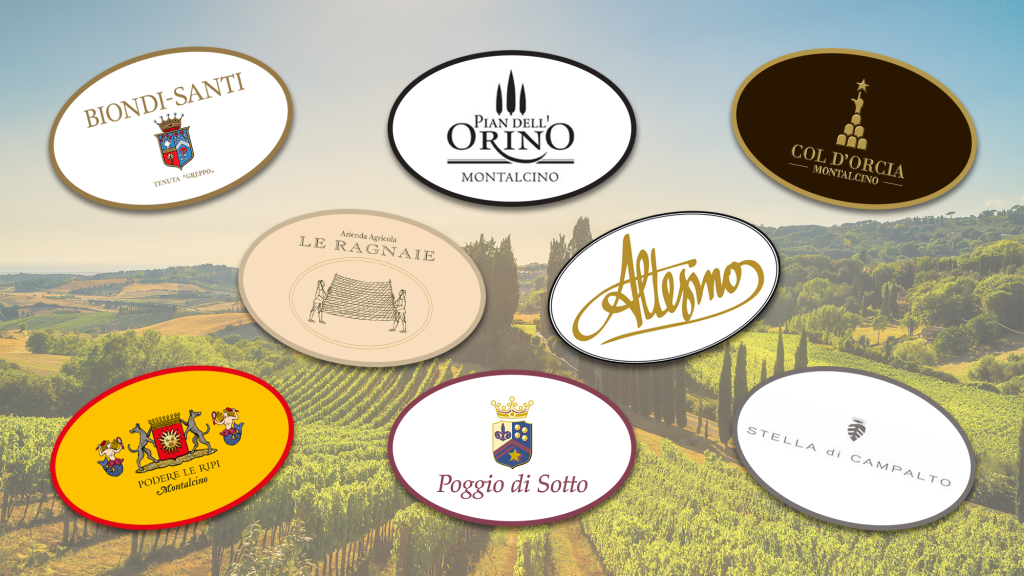
Sangiovese is the most prevalent grape grown in Italy’s stunning Tuscany region, and among wines made from it, the storied wines of Montalcino stand alone. This is not only because they come from a hyper-specific terroir, but also because all of the zone’s wines must be made from a singular clone of Sangiovese. Sangiovese Grosso, also known as the “Brunello” clone, was selected and isolated for its thick skins and large berries that lead to a robust structure. It’s also known for its tendency to ripen later in the season, making it a great fit for the sunny, rolling hills of Montalcino.
Since they’re produced from a small area of land, from a specific type of clone, and under strict aging regulations, Brunello di Montalcino DOCG wines are notoriously pricey. But for fans of Sangiovese who learned to love the grape through the more entry-level wines of Chianti and the region’s less esteemed Rosso di Montalcino designation, Brunello is the natural next step.
But where to start? Whether you’re looking for an accessible entry point, wines that represent the region’s history, or the pinnacle of what Brunello has to offer, here are eight producers you should try to get to know Brunello di Montalcino.
Biondi-Santi
The history of Brunello di Montalcino can actually be traced back to one winery: Biondi-Santi. Here, Clemente Santi and his nephew Ferruccio Biondi-Santi focused on wines made entirely with the Sangiovese Grosso or “Brunello” clone, producing the first vintage of Brunello di Montalcino in 1888. The estate still exists today, operating on 80 acres of vineyards just southeast of the village of Montalcino. As the “founder of Brunello,” Biondi-Santi demands a high price point, starting at around $300 for the current release. But if you’re looking to dig into the history and really get to know the region, it might just be worth trying the elegant, structured wines that started it all.
Col d’Orcia
Col d’Orcia, another winery central to the region’s history, can be traced back to at least 1890, when the Franceschi family purchased the property. In 2010, the estate converted to organic agriculture and is now the largest certified organic vineyard in Tuscany. The price tags on Col d’Orcia’s Brunellos are much more palatable, starting at around $55 for a recent vintage. This, plus the wine’s ripe notes of black cherries, berry preserves, and spice, make for a great introduction to the region.
Pian dell’Orino
Located next door to the esteemed Biondi Santi estate, Pian dell’Orino was founded in 1997 by Caroline Pobitzer and her husband Jan Herback. The property spans over 28 acres, including 14 acres of vineyards interspersed with plots of olive trees, gardens, and forest. The winery was one of the first to receive biodynamic certification in the region, and the couple at the helm continue to prioritize sustainability as well as carry out comprehensive soil and agricultural research on their land. The estate focuses solely on Sangiovese, including an approachable Rosso di Montalcino as well as a few site-specific Brunello bottlings. The wines undergo spontaneous fermentation and are aged in oak for about 28 months. They’re known for their precision and finesse, undoubtedly influenced by the attention to detail the team pays in the vineyard. Expect bright red fruits, blood orange, pomegranate, and spice.
Le Ragnaie
Le Ragnaie was originally founded in 1991, but it wasn’t until winemaker Riccardo Campinoti purchased the estate in 2002 that it started to receive attention for its refined take on Brunello. When Campinoti took over, he was focused on sourcing grapes from some of his favorite sites across the region, purchasing a number of high-elevation parcels that led to beautifully focused wines. The estate offers a number of cuvées that each evoke a specific terroir. These wines are known for their bright aromatics with red berry and citrus notes, as well as their well-integrated tannins, making them a great option for fans of the more lifted, high-toned expressions of Sangiovese. Plus, the entry-level bottling is available for around $80 (a relative steal for the quality).
Altesino
For those looking to get into Brunello di Montalcino by visiting the region in person, keep Altesino in mind for your next trip. The grand estate, located just outside of the scenic city of Siena, comprises a stunning 14th-century palazzo nestled among rolling hills of vines. The winery was also the first to introduce the idea of single-vineyard “cru” bottlings in Montalcino with the release of its Montosoli Brunello in 1975, named after the esteemed vineyard it comes from. Start with Altesino’s Brunello di Montalcino, available at about $50 per bottle, and if you’re thirsty for more, level up with the Montosoli bottling at around $150.
Podere Le Ripi
Francesco Illy — yes, of the Illy coffee family — has a background in coffee, advertising, and nature photography, but his love of the wines of Montalcino drew him to open a sustainable farm and winery in the region, founding Podere Le Ripi in 1997. He started by planting his first vineyard in 1998, and now the estate covers over 130 acres of vineyards, forest, and olive groves. The property achieved biodynamic certification in 2012. Le Ripi produces a number of compelling, site-specific Brunello wines to explore, and we’d be remiss not to mention the winery’s stunning Sangiovese rosé.
Poggio di Sotto
This legendary Montalcino estate was established in 1989 on a hill in the village of Castelnuovo dell’Abate. The property boasts steep vineyards situated between 650 and 1,300 feet above sea level with a high concentration of old Sangiovese vines that reach over 50 years old. This leads to deeply expressive examples of Sangiovese with concentrated notes of crunchy cranberries, juicy red cherries, orange zest, and balsamic. The wines are esteemed for their complexity and their ability to age, earning them a hefty price tag, starting at about $225. But for those going all-in on their Brunello journey, Poggio di Sotto represents a classic style and a stern commitment to the Sangiovese grape.
Stella di Campalto
Another pricey producer, Stella di Compalto represents the pinnacle of Montalcino for many sommeliers and wine lovers. The estate was originally founded in 1910 under the name Podere San Giuseppe but was abandoned during World War II and remained neglected until Stella di Compalto’s family purchased the winery in 1992. This is also when she took over the viticulture and winemaking, restoring the property and implementing organic agriculture. The estate now has just over 13 acres of vines, making it a relatively small producer in the region. Campalto ages the wines longer than the region’s requirements, typically about two years more than other producers. Between the limited production size, attention to detail in the vineyards and winery, and the extended aging, the wines can reach upwards of $400. But for those looking to try unique, distinctive Brunello wines, this is where to splurge.
The article 8 Producers You Should Know to Get Into Brunello di Montalcino appeared first on VinePair.