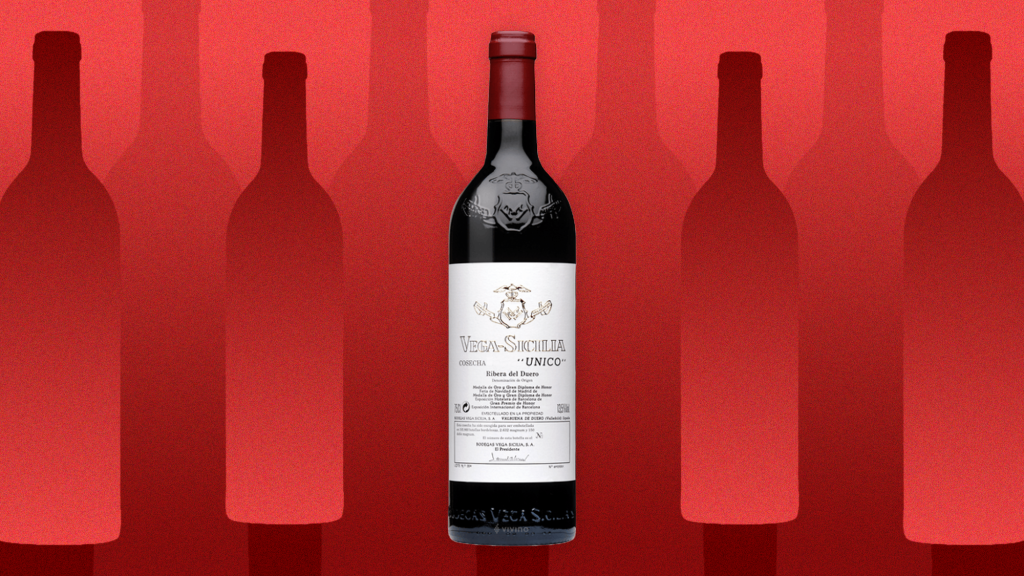
Some of the world’s great viticultural regions are characterized by their diverse range of wines and producers, while others are defined by a single, standout bottle. Spain’s Ribera del Duero falls into the latter category. More often than not, a mention of the region’s bold, Tempranillo-based wines brings a sommelier or collector’s mind to a singular expression: Vega Sicilia Unico.
Vega Sicilia is one of Ribera del Duero’s most historic and highly esteemed wineries. The estate was originally founded in 1864 by Bordeaux-trained Spanish winemaker Don Eloy Lecanda Chaves, who brought both technical skills and grape cuttings with him from France. The winery first launched Unico in 1915 as a bold blend of Tinto Fino (a robust local clone of Tempranillo) and Bordeaux varieties. Today, the bottle is primarily Tinto Fino blended with a small amount of Cabernet Sauvignon, the percentage of which changes ever so slightly with each vintage. The wine is aged for at least 10 years between the time spent in barrels (a mix of French and American oak) and in the bottle before release.
Unico was met with early acclaim, further propelled by its prize-winning appearance at the 1929 World’s Fair in Barcelona. The wine’s prestige only continued to rise over the years as it earned high scores from critics captivated by its richness and depth. Unsurprisingly, all of this praise has driven the price for a current-release bottle above the $500 mark. So for those curious to try the style — who aren’t fine wine collectors — it’s probably best to seek out a more accessible option first. If you’re looking to experience the bold, deep, fruit-forward wines of Ribera del Duero or just want a big-name, aged Spanish wine, here are six alternatives to Vega Sicilia’s Unico.
Tempos Vega Sicilia Alión
While Unico is far and away the most prestigious wine from Vega Sicilia, the winery offers a number of other labels for those eager to get their hands on a bottle from the region’s most prestigious estate. The Alión bottling is made with 100 percent Tinto Fino and aged from 12 to 14 months in new French oak barrels from Bordeaux. The final wine is then aged for an additional 15 months in the bottle prior to release. So, while the aging regimen doesn’t come close to the Unico’s 10-plus years, the Alión bottling still brings the intensity that Ribera del Duero drinkers love — and all for about $120. Expect powerful fruit notes of blackberry, plum, and juicy cherries as well as savory accents of tobacco, spice, leather, and smoke.
Dominio de Pingus ‘Psi’ Ribera del Duero
If there’s one winery giving Vega Sicilia a run for Ribera del Duero’s top spot, it’s Dominio de Pingus. Its history doesn’t date back as far as Vega Sicilia’s — Danish winemaker Peter Sisseck founded Pingus in 1995 — but the wines quickly caught up in both prestige and price point. Its signature Pingus bottling can go for over $1,000 today, with its more approachable Flor de Pingus bottling selling for around $115. But, for an entry point to this esteemed estate, start with the Psi bottling meant to showcase the potential of the region’s old vineyards. Sisseck works with old, head-trained vines in mixed plots of Tinto Fino and Garnacha with a few local varieties mixed in and employs biodynamic agriculture practices. The wine is made with long, gentle macerations and aged in used barrels. While Psi doesn’t exhibit the same mature, oak-forward style as Unico, it showcases another interesting side of Ribera del Duero. And, you still get those lush, full-bodied notes of black cherry, vanilla, and spice from a top producer, all for about $38.
Viña Sastre Ribera del Duero Roble
Viña Sastre is a family-run estate located in the town of La Horra in Ribera del Duero. There, winemaker Jesús Sastre focuses on making site-driven wines from old vines: The single-vineyard-designated bottlings are only made from vines planted before 1960. The Roble bottling is an homage to Jesús’s father, Rafael Saste, who founded the winery in 1992, acted as his son’s mentor, and believed in low-intervention winemaking. The wine is sourced from high-elevation estate vineyards, spontaneously fermented, and aged in a mix of French and American oak barrels for eight months. The result is a concentrated expression of Tempranillo with rich notes of blackberry jam, ripe raspberries, cedar, coffee beans, and smoke. Viña Sastre Roble is available for around $25, making it a great gateway to Ribera’s wines.
Pago del Cielo Celeste Reserva
Founded by the prominent Torres wine family in 2004, the Pago del Cielo winery crafts wines across Spain’s Ribera del Duero and Rueda regions. The Celeste Reserva bottling is sourced from vineyards planted almost 3,000 feet above sea level, leading to an elegant, complex expression of Tempranillo. The wine is aged for a minimum of 16 months in 96 percent new French oak and 4 percent American oak barrels. The resulting wine offers ripe cherry and plum notes with hints of mocha and vanilla woven throughout. The palate is full-bodied with Ribera del Duero’s signature intense tannic structure.
Cuentaviñas Ribera del Duero Tinto Fino
Though winemaker Eduardo Eguren comes from a long winemaking legacy, Cuentaviñas is relatively new to the region. Eguren launched the project in 2018 in Rioja after inheriting three remarkable vineyard sites from his grandfather, and, in 2019, he expanded the project to Ribera del Duero with a crop of centenarian vineyards planted along the Burgasela riverbank. These sites produce a deeply expressive wine with mixed berries, ripe cherries, coffee beans, pepper, and spice. If the goal is to impress a fan of Spanish reds, this compelling take on Tinto Fino will surely do the trick, and for just $65 a bottle.
Lopez de Heredia Viña Tondonia Reserva
If what you’re looking for at the end of the day is a rich expression of Tempranillo with some age on it, your best bet might be to get outside of Ribera del Duero. While buying a top wine from a highly regarded producer in the region might cost you upwards of $500, a reserva bottling from one of the most esteemed producers in Rioja, just to the north, can be found for a relative steal. Lopez de Heredia, originally founded in 1877, is one of the best-known producers in Rioja, and all of Spain for that matter, so if it’s heritage and prestige you’re after, this winery certainly delivers. If you’re interested in purchasing a wine that’s been extensively aged like Vega Sicilia’s Unico, the recently released 2012 bottling of Lopez de Heredia Viña Tondonia Reserva was aged for six years in American oak and six additional years in the bottle. That’s even more time spent aging than Unico’s latest release, and this one is available for just $60 to $75 in retail shops.
The article 6 Alternatives to Vega Sicilia Unico, Ribera del Duero’s Renowned Red appeared first on VinePair.