Cocktail trends of yore have a lot to offer. In 1862, Jerry Thomas revolutionized cocktail culture with his book, “The Bartender’s Guide.” Thomas was soon followed by legendary barman Harry Craddock and, later on, Dale Degroff whose recipes and techniques helped start a cocktail renaissance. In more recent history, the teams behind establishments like New York City’s Milk & Honey and Death & Co. created a blueprint for modern-day bars. Centuries and decades later, a glance across cocktail menus or around bar rooms reveals the persistent influence of these powerful figures and their creations.
That said, there are still trends that some believe are better left in the past. Are neon-colored cocktails fun or frivolous? When does a thoughtful garnish become over the top or gimmicky? How many is too many when it comes to cocktail ingredients? To answer these questions, we asked 13 bartenders from around the country to share the cocktail trend that they never want to see return. Here’s what they said.
The old cocktail trends that should never come back, according to bartenders:
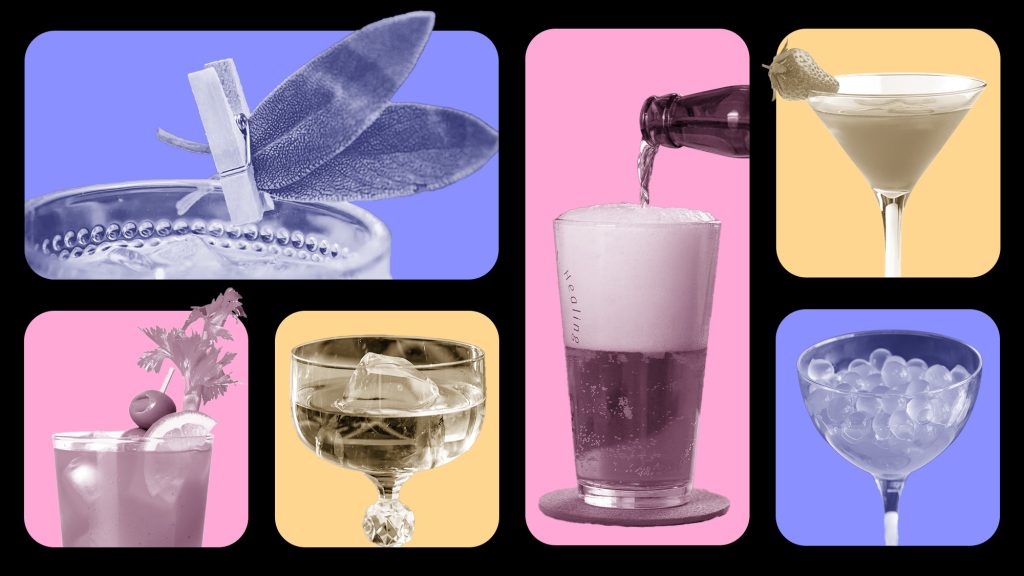
Over-garnished Bloody Marys
Gatekeeping
Crystal-clear cocktails
Flavored, neon Martinis
Tiny clothespins for garnishes
Complex, ingredient-packed cocktails
Spherification
Artificially flavored and colored cocktails
Lazy bartending
Shaker pints for beer service
Calling fully licensed bars speakeasies
Any past fad
“If I had to pick one, it’s the over-garnished Bloody Mary. I’m a pretty easygoing guy. We’ve seen a lot of unnecessary trends over the years, but most of them were harmless fun. At the end of the day, we’re all just trying to provide a fun experience, so I’m generally on board. That said, those Bloody Mary happy meals were a hard no for me. I’m not talking about a lot of olives, celery, lemon, etc. I mean the ones with hot food like sliders or chicken wings. I swear I saw one topped with an entire Cornish hen. They look like a nightmare to execute, and I’ve never actually seen anyone enjoy drinking (or eating) one.” —Kyle Darrow, co-owner, Next of Kin, Philadelphia
“I think there’s been a resurfacing trend where the ego and gatekeeping is coming back heavy, like it felt a decade ago — specifically trickling down from a lot of veteran and celebrated bartenders who are resting on their laurels. After setting the example and standards for a new generation and, respectfully, being in the game just as long, this disappoints me, and we can do better. Let it go, move on, it’s only shrinking your influence and stunting the creativity and growth of the industry. We’re all in this together, and gatekeeping is more of a bullying tactic, not about building camaraderie.” —Jackie Gentry, bar manager, Humbug, Charlotte, N.C.
“I’d be happy to see overly engineered, crystal-clear cocktails fade out a bit. Clarity for the sake of clarity doesn’t always translate to better flavor or a better experience. I’m all for modernism and techniques, but sometimes it feels like we’ve moved so far away from a cocktail and into a science experiment that hardly resembles what ingredients went into the drink. I’ve always cared more about preserving the character of ingredients, even if it means that a drink looks a little more alive.” —Blaise Faber, owner and operator, Valentine and Bar 1912, Phoenix
“I don’t miss when anything in a stemmed glass was called a Martini. Sickeningly sweet fruit Martinis that rarely if ever incorporated fresh products. Apple, watermelon, pear, blueberry, etc. were all dictated by the latest vodka or liqueur on the market — and usually neon-colored.” —Dan Osborn, lead bartender, Goodnight Kenny, Poughkeepsie, N.Y.
“Teeny tiny clothespins for cocktail garnishes! I’ll be a happy man if I never see an herb anchored to a glass by a clothespin again. If we could keep precious presentations in the past, it’d be better for everyone involved. Less is more!” —Eduardo Porto Carreiro, beverage director and sommelier, Rocket Farm Restaurants, Atlanta
“I don’t miss the era of 10-plus-ingredient cocktails where complexity was mistaken for quality. It felt more like proving a point than making something delicious. I think we’ve moved back to a more refined style that values precision and prioritizes balance. The wave of hyper-complicated craft cocktails — including house infusions, tinctures, shrubs, multiple bitters, and elaborate builds all in one glass — was a defining trend of that era. Today, the industry favors minimalism, clarity, and intention, especially in agave-focused (my personal favorite) and classic-leaning bars. Complexity still exists, but it’s usually behind the scenes rather than stacked into a single cocktail.” —Kayla Wenzel, bar manager, Native Fine Diner, Greenville, N.C.
“One trend I’ve never been a fan of and honestly hope to see less of is spherification. More often than not, the payoff just isn’t there. The texture can be fun for a second if it’s good, but nine times out of 10, it’s not. Still, if the flavor inside isn’t bold enough to actually move the needle, it ends up feeling more like a gimmick than a thoughtful component. When technique starts to overshadow intention, it loses the point. I am all for an edible garnish that is complementary and thought-provoking, but this trend, in my opinion, needs to be put to bed.” —Libby Lingua, owner and operator, Highball, Phoenix
“One cocktail trend I hope stays in the past is the neon drinks of the ’60s, ’70s, and ’80s. Those cocktails relied heavily on artificially colored liqueurs for visual impact. Today, we have incredible natural ingredients that deliver vibrant colors and real flavors — something that better reflects the craftsmanship behind modern cocktails.” —Michael Mesch, bar manager, St. Roch Fine Oysters and Bar, Raleigh, N.C.
“With everything in life, trends come and go, but there are some that should stay in the past. In the cocktail world, I hope we are over the lazy bartending trend. Using fake sour mixes instead of fresh lime juice is not giving the consumers a true taste of what a cocktail is or should be. I believe that fresher products without too many added sugars are very easy for any bar to have. We also have more companies available to provide bars with fresh juices and syrups if they can’t make them in-house.” —Agustina Sofo, head bartender, Estereo and Estereo FM, Chicago
“Glassware has always been an innate part of a cocktail, but the shaker pint was the unfortunate standard for beer service at one point, even at upscale bars. It’s aesthetically boring and is literally the worst for the aromatic experience. Here’s to hoping we always give reverence to craft beer at any bar.” —Elliot Hoffman, co-owner, Meantime, Detroit
“I personally dread seeing the ‘everything-is-a-Martini’ era coming back. Neon-colored, candy-flavored drinks served in wide-brimmed Martini glasses all ending in ‘-tini.’ I thought drinking culture left that behind, but you see it pop up here and there.” —Vincent Chirico, owner, Idlewild, Charlotte, N.C.
“We never want everything to be called a ‘speakeasy’ ever again. A speakeasy was a really specific thing, and just because your adorable, fully licensed bar is hard to find doesn’t make it that thing!” —Ben Weihbrecht, head bartender, Ladyslipper, Provincetown, Mass.
“Maybe this is a hot take, but the cocktail trend I hope never comes back is any trend. Keep it diverse, don’t get stuck, keep an open mind. What’s delicious will always be delicious, and what’s trendy will last if it’s good.” —Gianna Johns, owner and beverage director, Baby Gee, Long Beach, Calif.
The article We Asked 13 Bartenders: Which Old Cocktail Trend Should Never Come Back? appeared first on VinePair.