When you open a bottle of wine, you expect boozy notes to waft from the neck after you remove the cork. A gob of olive oil? That’s unexpected.
Scott Woltz knew he’d be encountering a special bottle when he was asked to pour wines at a fundraiser in upstate New York. The event’s organizers told Woltz, along with his team of fellow sommeliers, that they’d be opening a double-sealed bottle with cork and, below it, a layer of olive oil. So, after Woltz disgorged the 12.9-liter bottle of 1952 Giacomo Conterno Barolo Riserva Monfortino, he and his cohort carefully siphoned off the oil to reach the juice.
But by the 1950s, corks were already in vogue. So, why did such a fabled, insider-favorite winery add a layer of olive oil between the bottle’s cork and its wine? Woltz, beverage director and general manager at bookstore slash wine bar Bibliotheque in Manhattan’s SoHo neighborhood, believes the decision was Conterno’s way of pointing toward an integral development in wine history.
Accounts agree that wine from Egypt, Greece, and Rome — three hubs of ancient winemaking — was kept in amphorae casks. Some say the vessels were stuffed with raw materials like cloth and leather and attribute the first instances of plugging wine with olive oil to the Romans, as the region’s ready availability of olive trees meant olive oil was always on hand. The Romans and the Greeks also experimented with oil-soaked rags, which French winemakers continued to use into the 1600s.
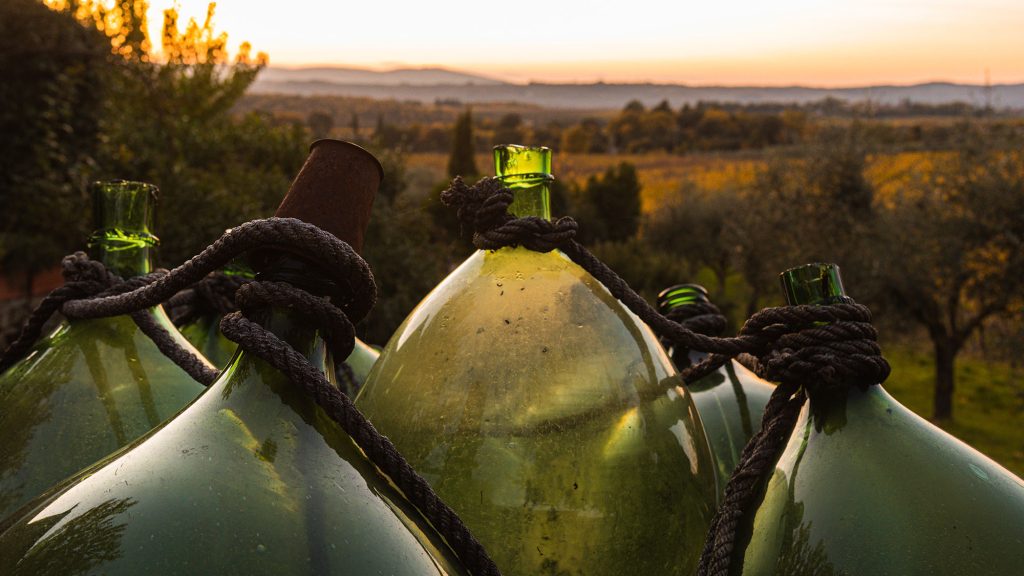
But even as commercial producers started using corks in the 17th century, Woltz says rural families kept using olive oil to cover their wine. “Even into the 1900s, people would make wine at home and keep it in demijohns,” Woltz says. “They didn’t have a cork or another stopper, so they would just put olive oil above it, and that would create the barrier to stop oxidization.”
Credit: Scott Woltz
Woltz remembers feeling awestruck by the history of the 1952 Conterno bottle, prompting weekends’ worth of research into why the producer would have chosen to cap the bottle with both cork and olive oil. He says there are a few possible reasons.
It’s feasible that someone at Conterno decided to include a secondary form of protection. The other possibility, he says, is Conterno made the large-format bottles for family and friends. Manufacture of 12.9-liter bottles was never common, so the unique size would suggest the winemaker produced them only for special occasions. In Woltz’s view, double-capping on certain editions was Conterno’s way of adapting to modernity while referencing winemaking history.
“It’s like, ‘Here’s the old way of doing things as perceived in the ’50s versus the new, more modern way of glass bottles in large formats with a cork,’” he says.
Ahead of the fundraiser, Woltz and his fellow somms knew what they’d be pouring, so they made sure the bottle stood upright for a week to encourage the oil to pool at the top. They used a Durand to remove the cork before siphoning out the oil — and a little bit of the wine, for good measure — into a decanter. Then, the group poured the rest of the pure wine into 10 large-format decanters and found that some still had bits of oil floating around.
“The wine that had some oil left in it felt a little more oily and fatty, but it didn’t actually ruin the drinking experience,” he recounts. “The wine was still gorgeous.”
The article Why Some Old Wines Were Sealed With Olive Oil appeared first on VinePair.