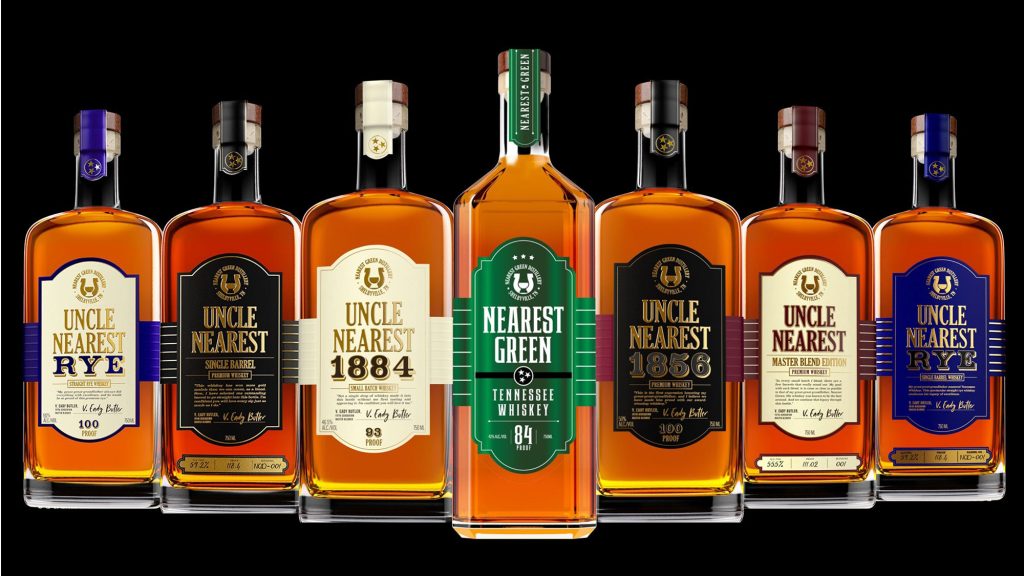
The ongoing legal battle over the future of Uncle Nearest, Inc. erupted into something more akin to a whiskey war on Tuesday, when its embattled cofounder took to social media to proclaim that the Tennessee firm’s court-ordered receivership “had ended.”
As has often been the case when it comes to Fawn Weaver and her high-flying boutique liquor firm, which was laid low by over $100 million in defaulted loans and ordered into receivership by a federal judge in August 2025, the situation is a bit more complicated than her latest Instagram video makes it seem.
Whether the receivership is over depends on the outcome of Chapter 11 bankruptcy petitions filed by Uncle Nearest, Inc. on Tuesday, March 17, and signed by Weaver in her one-time role as the firm’s chief executive officer. While she remains the face of the company she founded with her husband Keith in 2017, and has referred to herself throughout the receivership as “The People’s CEO,” by entering into that arrangement last year, she agreed to an order that appears to give the receiver the exclusive power to enter the firm into bankruptcy proceedings. How the bankruptcy court will interpret this information remains to be seen.
“It’s going to take a little bit of time to get through that,” said Kevin McGee, an attorney who has practiced beverage-alcohol law for more than two decades and has closely followed the case. Chuckling, he added: “Some evil bastard is going to turn this into a bar exam question at some point.”
For his part, Uncle Nearest’s receiver, Phillip Young, quickly responded to the bombshell bankruptcy filing with one of his own arguing it is bunk. “Fawn Weaver lacked the authority to file bankruptcy petitions on behalf of the Receivership Entities,” he wrote in a Wednesday morning motion to dismiss filed with the bankruptcy court.
In related filings, he cited multiple sections of the receivership order issued by Judge Charles E. Atchley of the United States District Judge of Eastern Tennessee last year outlining the receiver’s exclusive powers and the ones Weaver and other Uncle Nearest officers are enjoined from exercising. Young also entered into the record an email exchange with the attorney who filed the bankruptcy petition for Weaver in which he referred her to one of those sections of the agreement that specifically refers to Chapter 11 bankruptcy proceedings.
“There is nothing in 10 q. [the section in question] that states the receiver has exclusive authorization to file nor excludes anyone else from filing,” Weaver’s attorney, Kelli D. Holmes responded. That is true, however, the section of the receivership order directly prior explicitly states “The Receiver shall be exclusively vested with: (a) all the powers of officers, directors, members, and/or managers (as applicable) of Uncle Nearest.” Another section enjoins anyone but the receiver from “disturbing, interfering or affecting the Receivership Assets or the administration of the receivership estate.”
In a separate filing Tuesday evening with the receivership court, Young requested an “expedited motion for sanctions,” citing the the bankruptcy filing and a Tuesday press release from Grant Sidney, a nominally unrelated asset controlled by Fawn Weaver that has been the subject of scrutiny due to allegedly commingling funds with Uncle Nearest, as evidence of her “wanton and willful violation of this Court’s Order Appointing Receiver.”
The snap Chapter 11 petition was not the only legal maneuver Weaver announced on Tuesday. The release from Grant Sidney also proclaimed that it, along with the Weavers, were suing Uncle Nearest’s lender in the Supreme Court of New York, alleging “a smear campaign against the fast-growing whiskey brand by knowingly circulating false accusations, including claims of missing inventory, financial misconduct, negative cash flow, and insolvency.” The lender, Farm Credit Mid-America, has been attempting to recover $108 million in loans made to Uncle Nearest, the default of which form the basis for the receivership. At publication, the bank has not filed a response with the Supreme Court of New York to the Grant Sidney suit, which makes allegations including defamation, trade libel, and tortious interference and calls for five different types of damages and a jury trial.
Neither Grant Sidney nor FCMA immediately responded to requests for comment.
To her 305,000 Instagram followers, the embattled cofounder framed the civil suit as “groundwork to prove the bank knowingly circulated false accusations about Uncle Nearest as well as Keith and me.” The claim dovetails with contentions to her audience that Chapter 11 bankruptcy is a daylighting exercise that will weaken the receiver’s hand.
“Chapter 11 requires complete financial transparency,” said Weaver in her video. “No one gets to hide behind filings without evidence or accusations without proof, and the picture that has been painted about Uncle Nearest will now have to be proven through numbers that add up, not words.”
A bankruptcy trustee and a court-ordered receiver are both fiduciaries, said McGee, and there is “no different standard” that the former would be held to that the latter wouldn’t. Crucially, bankruptcy proceedings, if they happen, aren’t likely to be any more favorable to the Weavers’ interests than the receivership, and could in fact be less favorable. “The bankruptcy court is concerned with the balance of creditors to debtors, and that is very number-driven, whereas the receivership appeared to be balancing a lot more of what [Uncle Nearest could] look like as an ongoing business,” said McGee. And it’s entirely possible that a bankruptcy trustee, if appointed, would just opt to coordinate with the receivership proceedings. That would expose Uncle Nearest’s brand to more scrutiny, delays, and the reputational harm that invariably follows from headlines about bankruptcy. “This does all of those things that the receivership was intended to try to avoid,” said McGee.
VP PRO TAKE
This gets at the strategic mystery of the Weavers’ attempt to enter Uncle Nearest into bankruptcy behind its court-appointed receiver’s back.
One reading of this move is that the Weavers have decided their best bet is to slow down the receivership from selling the company’s Martha’s Vineyard mansion, which the Weavers had purchased for $2.25 million using an unsanctioned LLC that FMCA has allegedly violated its loan agreement. Though that sale was in motion, the house represents a small and relatively inconsequential chunk of the Uncle Nearest empire. More importantly, on Monday, a day before the Chapter 11 filing, receivership judge Charles Atchley had already issued a stay on that sale, ordering a more substantial appraisal.
Then, there’s the matter of the Weavers’ nominally unrelated businesses — including Grant Sidney — which Young has argued should be included in the scope of the receivership due to alleged commingling of assets. Bankruptcy doesn’t magically cancel those probes into the Weavers’ network of businesses, even if it pauses them in the short term.
“It’s a delay, and it’s a bar-exam question,” said McGee. “But I don’t know if it really changes anything in the destiny of Uncle Nearest.”
A version of this article originally appeared in Dave Infante’s independent newsletter, Fingers.
The article Uncle Nearest Dispute Escalates: Co-Founder Files for Bankruptcy and Sues Lender, as Receiver Calls for Sanctions appeared first on VinePair.