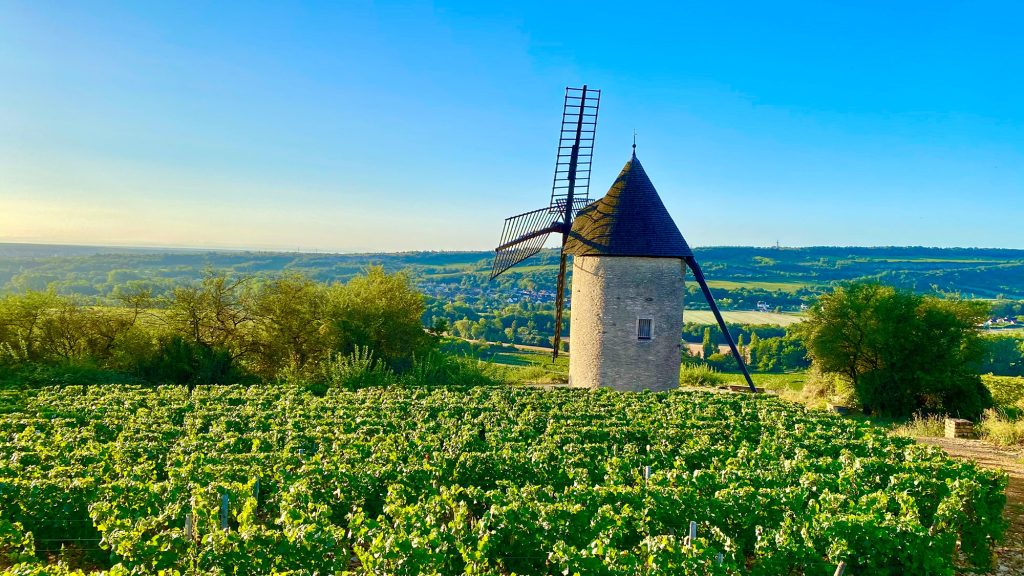
The luxury wine space can often be split into two groups: Burgundy and everything else. The French region is indisputably the world’s most popular producer of fine wine, with bottles from the area dominating Michelin-starred restaurant wine lists and fetching impressive sums at auction. Much of that status comes from the best-in-class terroir provided by the Jurassic-era limestone bed Burgundy sits upon.
While Burgundy at large is legendary, specific parcels of land are even more prestigious. They are, of course, the Grand Cru vineyards. As the highest classification in the region, Grand Cru plots account for only about 2 percent of land-under-vine in Burgundy, hence their wines’ sky-high prices. An entry-level Bourgogne might run you between $20 and $50, whereas Grand Cru Burgundy tends to go for a minimum of $100 per bottle. Wade into cult-producer territory, and you’re looking at prices in the high five-figures.
But where do each of these wines come from? In Burgundy, the term Grand Cru refers to a specific plot of land — called a climat in the region — which stands in contrast to areas like Champagne where entire villages are classified. That said, each prestige parcel is in a Burgundian village (or spans multiple), and some villages are home to more than others.
To better delineate which areas have the most Grand Cru plots, we compiled this infographic spotlighting the four villages with the highest concentration of elite vineyards. Get to know them below.
Gevrey-Chambertin
Located nine miles south of Dijon is Gevrey-Chambertin, a village in the Côte de Nuits that’s home to the greatest number of Grand Cru climats in Burgundy. The AOC is exclusively dedicated to Pinot Noir production and spans approximately 410 hectares (roughly 1010 acres). Grand Cru vineyards account for around 210 of those acres, meaning vineyards of that caliber account for roughly a fifth of all wine produced in the village. These vineyards include Chambertin, Chambertin-Clos de Bèze, Chapelle-Chambertin, Charmes-Chambertin, Griotte-Chambertin, Latricières-Chambertin, Mazis-Chambertin, Mazoyères-Chambertin, and Ruchottes-Chambertin.
It’s hard to miss the presence of “Chambertin” in each vineyard’s name. When Gevrey-Chambertin was established centuries ago, it was referred to as simply Gevrey, but in 1847 the name was formally changed in acknowledgement of the village’s most prestigious site. To this day, Chambertin remains the most elite parcel in Gevrey-Chambertin, with other plots featuring the moniker in their names as an homage.
Bottles from these spots are often described as being among the most powerful red Burgundies, with structured tannins and juicy black fruit notes. Like all Grand Cru Burgundies, wines from the locale are labeled based on their AOC, and several have cracked the list of the world’s most expensive. Both Domaine d’Auvenay Mazis-Chambertin Grand Cru and Leroy Chambertin Grand Cru are produced with Gevrey-Chambertin fruit, with grapes harvested from Mazis-Chambertin and Chambertin, respectively.
Morey-Saint-Denis
Just south of Gevrey-Chambertin is Morey-Saint-Denis, a small commune roughly a third of the size of its northern counterpart. Similarly located in the Côte de Nuits, vineyards in Morey-Saint-Denis are planted with Pinot Noir, Chardonnay, and Pinot Blanc, though production of red wine greatly outpaces that of white. In the village, there are a total of five Grand Cru plots: Clos de la Roche, Clos des Lambrays, Clos Saint-Denis, Clos de Tart, and Bonnes-Mares (partially located in neighboring Chambolle-Musigny).
Of the bunch, Clos de la Roche is widely cited as the finest. The appellation was awarded its AOC in 1936, and, given its northern positioning in the village, is often viewed as an extension of the Grand Crus in Gevrey-Chambertin. As such, one can expect the same punchy structure in Clos de la Roche wines, with pronounced notes of truffle and pops of red and black fruits. Clos de Tart is also particularly notable. The entirety of the 7.53 hectare (18.6 acre) vineyard belongs to the estate of the same name, making it the largest Grand Cru monopole in all of Burgundy.
Vosne-Romanée
When it comes to epithets in Burgundy that are instantly recognizable, “Romanée” probably takes the cake thanks to the powerhouse that is Domaine de la Romanée-Conti (DRC). The illustrious wine producer dominates Grand Cru production in the Vosne-Romanée commune thanks to its full ownership of two of the six plots, La Tâche and Romanée-Conti — the latter of which giving the Domaine its name. DRC uses fruit from these miniscule plots, approximately 15 and 4 acres, respectively, to produce two of the world’s most elusive monopoles. Domaine de la Romanée-Conti La Tâche Grand Cru Monopole retails for an average of $6,600, while Domaine de la Romanée-Conti Romanée-Conti Grand Cru goes for an eye-watering $23,000.
In addition to La Tâche and Romanée-Conti, the small village in the Côte de Nuits also has the AOCs of La Grande Rue, La Romanée, Richebourg, and Romanée-Saint-Vivant within its borders. Like La Tâche and Romanée-Conti, La Grande Rue and La Romanée are both monopoles, owned by Domaine Lamarche and Comte Liger-Belair, respectively. That means that only Richebourg and Romanée-Saint-Vivant have fruit that’s theoretically accessible to a wide swath of producers, though that doesn’t make bottles any cheaper. Even the most reasonable Richebourg and Romanée-Saint-Vivant Grand Crus retail for several hundred dollars.
Puligny-Montrachet
Moving south of the Côte de Nuits, one will find Puligny-Montrachet, a village home to the highest concentration of Grand Cru vineyards in the Côte de Beaune. Just like Gevrey-Chambertin, Puligny-Montrachet was founded as simply Puligny, with Montrachet tagged on in 1879 in recognition of the most important, eponymic vineyard there. The roughly 8 hectare (approximately 20 acre) plot sits on a rich limestone and marl slope and is widely regarded as one of the finest Chardonnay vineyards in the world.
In the same spirit as Gevrey-Chambertin, each of the Grand Cru vineyards in Puligny-Montrachet feature the Montrachet addition in recognition of the legendary site. These vineyards include Bâtard-Montrachet, Bienvenues-Bâtard-Montrachet, and Chevalier-Montrachet, though not Criots-Bâtard-Montrachet. While the name seems fitting, the vineyard is actually entirely located within the neighboring Chassagne-Montrachet village.
Though Pinot Noir production is allowed within the confines of the AOC, the region almost exclusively produces Chardonnay — the world’s most expensive Chardonnay at that. 40 percent of the world’s priciest bottles hail from Puligny-Montrachet’s Grand Cru sites including Domaine de la Romanée-Conti Montrachet Grand Cru, Domaine Leflaive Montrachet Grand Cru, Domaine d’Auvenay Chevalier-Montrachet Grand Cru, and Domaine d’Auvenay Bâtard-Montrachet Grand Cru.
*Image retrieved from Elena Skalovskaia – stock.adobe.com
The article The Burgundy Villages With the Most Grand Cru Vineyards [Infographic] appeared first on VinePair.