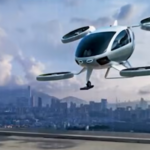
The U.S. Department of Transportation and the Federal Aviation Administration recently selected eight pilot projects to begin limited cargo and passenger operations using electric aircraft under the eVTOL Integration Pilot Program (eIPP). Most headlines will focus on the promise of air taxis. Supply chain leaders should focus on something else.
This initiative represents the early formation of a new logistics layer.
Several of the selected projects will begin with freight-oriented missions. According to New York, Florida among the states selected for electric aircraft pilot program, Florida’s program will start with cargo delivery before expanding to medical response and eventually passenger operations.
Other pilots focus on logistics use cases such as offshore support flights, regional cargo transport, and emergency response mobility.
These are not speculative concepts. They are operational logistics pilots.
Logistics Often Leads Transportation Innovation
Historically, freight networks have been the proving ground for new transportation technologies. Passenger mobility systems usually follow after reliability, economics, and operational models have been validated.
Cargo networks tolerate early-stage technology better than consumer transportation. Routes are predictable, operational windows are flexible, and the value of time-sensitive delivery is easier to quantify.
The new pilot program reflects that reality. As reported in DOT announces projects selected for U.S. eVTOL Integration Pilot Program, the program will test cargo logistics networks, medical transport missions, regional passenger service, and autonomous aircraft operations.
Freight operations are likely to be the first area where the economics begin to make sense.
Filling the Gap Between Trucks and Aircraft
Electric aircraft and eVTOL systems occupy a potential middle ground between trucking and traditional aviation.
Trucks offer flexibility but are constrained by congestion, distance, and road infrastructure. Conventional air freight provides speed but requires airports, runways, and higher operating costs.
Electric aircraft introduce the possibility of short-range aerial logistics corridors connecting regional distribution points without the infrastructure requirements of commercial aviation.
For supply chains, this creates a new operational option: rapid regional freight movements for urgent inventory, medical supplies, and high-value shipments.
Instead of replacing trucks or cargo aircraft, these systems could fill a transportation gap that has historically been inefficient.
Florida as an Early Testbed
Florida’s inclusion in the pilot program is particularly notable.
The state’s geography and dispersed metropolitan pattern make it well suited for regional aerial logistics. Medical supply delivery, disaster response logistics, and time-critical freight movements are all realistic early use cases.
The program also aligns with Florida’s broader aerospace ecosystem anchored by Kennedy Space Center, aviation manufacturing activity, and established aerospace testing infrastructure.
If these pilots demonstrate operational value, Florida could become an early example of how advanced air mobility integrates into logistics networks.
Certification and Infrastructure Still Ahead
Despite the momentum around advanced air mobility, several major hurdles remain.
None of the participating aircraft manufacturers have yet received full FAA type certification. Infrastructure such as charging networks, vertiports, maintenance capabilities, and air traffic integration must also mature before large-scale deployment becomes feasible.
Pilot programs like eIPP are designed to generate the operational data regulators and operators need to build those frameworks.
What This Means for Supply Chain Strategy
Modern supply chains are increasingly multi-modal and digitally orchestrated. AI-driven planning systems already evaluate routing options across truck, rail, ocean, and traditional air freight.
Electric aircraft introduce another potential variable in that optimization process.
If these systems become operationally viable, future logistics platforms will evaluate them alongside existing transport modes when planning urgent shipments or responding to disruptions.
Over time, electric aircraft could become part of a broader shift toward adaptive, AI-enabled logistics networks, where transportation decisions are dynamically optimized across multiple infrastructure layers.
A Small Step Toward a Different Logistics Network
The eIPP program should be viewed as infrastructure experimentation rather than immediate transformation.
Initial deployments will remain limited and focused on specialized missions such as medical logistics, offshore support, and high-value cargo routes.
But transportation networks evolve gradually. Pilots establish operational viability, standards follow, and infrastructure develops around proven use cases.
Electric aircraft have now entered that early operational phase.
For supply chain leaders, the message is simple: a potential new transport layer is beginning to move from concept into real-world deployment.
The post Electric Aircraft Pilot Program Opens a New Logistics Frontier appeared first on Logistics Viewpoints.