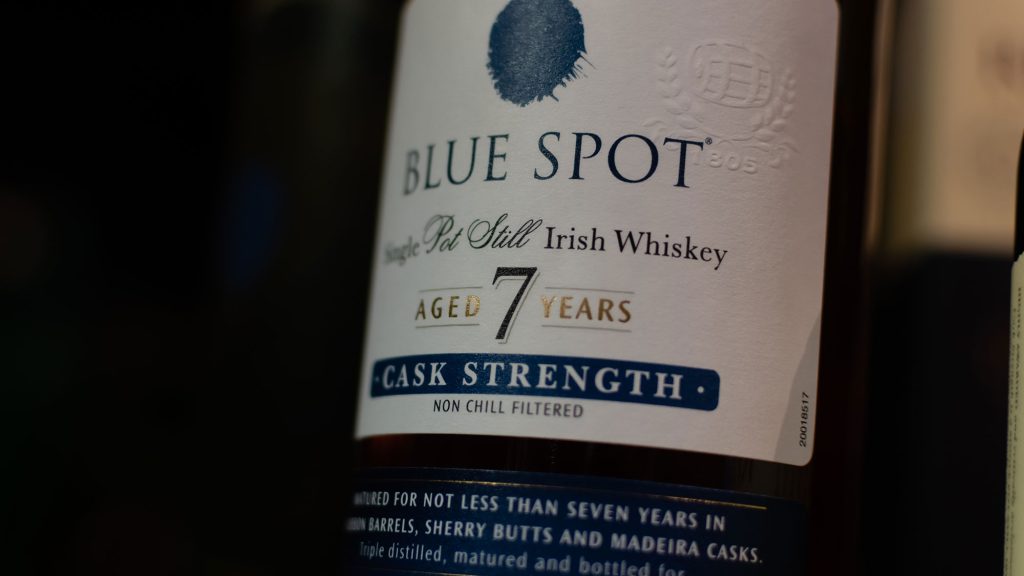
It’s a question that, across culture, politics, and religion, the Irish have been asking themselves for decades: How can we set Ireland apart from our counterparts in the U.K.?
Irish whiskey makers found their answer in unmalted barley.
The simplest definition of single pot still Irish whiskey is a distillate with a mixed mash bill of both malted and unmalted barley, says Alex Chasko, whose official title at Teeling Whiskey is chief technical officer but who really performs the tasks of master distiller and master blender. For Chasko, single pot still is to Irish whiskey as rye is to American whiskey.
“Single pot still is something that’s distinctively Irish,” he explains. “It’s the thing that separates Irish whiskey from the rest.”
The name, as Chasko tells it, is a bit of a misnomer: It comes from the copper pot stills used to triple distill malt whiskey. Copper pot stills have been popular since the dawn of malt whiskey making, and Irish distillers particularly took to them because they felt that the vessels’ implementation distinguished their product from column still-made liquors used for the so-called “silent spirits” like grain whiskey and vodka, Chasko says.
But the use of unmalted barley in the mash bill is the real differentiator of single pot still Irish whiskey. Irish law dictates a range of possible mash bill ratios that allows distillers to label their whiskey as single pot still. Unmalted and malted barley must each make up at least 30 percent of the mash bill, and a maximum of 5 percent of it can come from other grains, such as oats, wheats, or rye. The law offers some leeway, leading to significant mash bill variation, says Ciaran “Rowdy” Rooney, head distiller at Glendalough Distillery two hours south of Dublin.
Malting barely, he says, is essentially steeping the grains in hot water to encourage the seeds to grow minuscule roots and shoots, which then die off when removed from the water and dried. Malting yields the hallmark biscuit and cereal notes found in whiskey and beer, whereas unmalted barley delivers the raw grain’s spicy, grassy flavors. Beyond mash bill anomalies, single pot still Irish whiskey differentiates itself with its luscious, oily texture from contact with copper during the triple distillation process.
For most distillers and brewers, unmalted barley is undesirable — that’s why it’s cheaper. But for 18th-century Irish distillers, its lower cost was what made it preferable. While still under British rule, Irish distillers began purchasing and crafting whiskey from unmalted barley when the throne imposed a hefty malt tax in 1785. “If you go back 150 years ago, I’d say 95 percent of distilleries in Ireland would have made pot still,” Chasko says.
The malted-unmalted price disparity remains today. The current cost for a ton of unmalted barley hovers between €150 to €200 ($173 to $230) and hikes to €400 ($462) for malted, Chasko says. But the ingredient’s affordability does not lead to a cheaper quaff: Chasko says the spicy and herbaceous flavors, together with the silky texture, land single pot still expressions on the premium, more expensive side of the Irish whiskey spectrum.
The tradition of combining malted and unmalted grains is seen in Irish products beyond whiskey. Roasting unmalted barley is the flavor-defining step for stouts — more particularly Guinness, the cornerstone of all Irish beverages. Irish distillers’ and brewers’ preference for unmalted barley, brought about by taxes, is now something they consider with pride.
“Pot still is the quintessential Irish whiskey,” Rooney says. “It’s the most Irish of Irish styles of whiskey.”
The article Ask a Distiller: What Does Single Pot Still Mean in Whiskey? appeared first on VinePair.