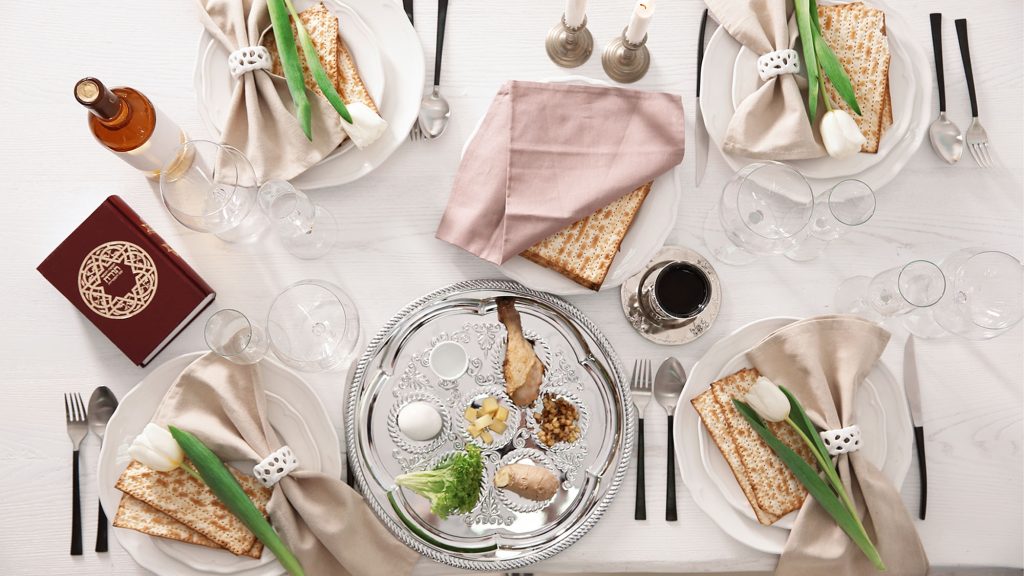
While Passover is a remembrance of a harrowing plight out of Egypt, it’s also a celebration of the resilience of our Jewish ancestors and our ability to share a meal together in the present. A reminder of suffering and the promise of a future free from it. An occasion to sing, eat matzo, and, most importantly, drink wine.
If you’re unfamiliar with the story, I suggest a viewing of the classic “Rugrats” episode or the underrated animated film “The Prince of Egypt,” both of which recount the journey of Moses and the Israelites from slavery to freedom. The story is told in a book called the Hagaddah, which also prescribes the rituals and practices of the traditional Passover meal, called a seder.
One of the central questions of the Passover text is “What is different tonight?” There are four main answers to this query: We eat only matzo (no leavened bread), we eat bitter herbs, we dip foods twice, and we recline in our seats during the meal. For some people, another difference is that we are obligated to drink four cups of wine with our meal — a difficult challenge, we know.
Los Angeles-based rabbi and author Jeffrey Marx explains why we drink wine at all: “It’s a sign of freedom.” He notes that nobles at Greek or Roman banquets would recline while eating and drinking, so we do the same as a sign of our liberation since it’s a practice slaves would not participate in. Why four glasses? “Each cup represents one of the promises of freedom that God made to the Israelites in Exodus,” he says.
You might be thinking you have divine permission to drink a whole bottle of wine by yourself, but that’s not quite the case. “The rabbinic definition of a cup is at least 3 ounces (less than half a cup). So, accompanied by food, one only need drink the equivalent of 12 ounces over the course of the evening,” Marx clarifies. Whether your family abides by that definition or has a heavier hand, drinking wine (red, white, and even grape juice are all permissible in Marx’s rabbinic opinion) at the seder is a mitzvah.
Credit: Маргарита Медведева – stock.adobe.com
Is Kosher Wine Even Good?
We will leave you to decide whether to serve only chametz, parve wine at your seder, but we want you to have all the facts about Kosher for Passover, or K4P, wines. Nowadays, not all kosher wines are highly sweetened like your classic Manischewitz. There’s an abundance of great wines that just happen to be kosher.
The two types of kosher wine are Mevushal and Non-Mevushal. Mevushal wines have been heat-treated so that, should you follow these religious laws, non-observant and non-Jewish people can handle them. In the past, this meant boiling until reaching a certain temperature, which can degrade the quality of the wine. Nowadays, Mevushal wine is flash pasteurized, a practice that minimizes the effect of heat on the wine’s flavor. According to Gabriel Geller, director of public relations and advertising and manager of wine education for distributor Royal Wine Corp, many non-kosher wineries also use the practice now as it eliminates bacterial growth and prevents premature oxidation. Non-Mevushal wines are not pasteurized so, per Orthodox Jewish laws, they may only be handled by observant Jews but they are still kosher certified.
After you decide between Mevushal or Non-Mevushal, there are a few other things Geller recommends looking for. To avoid sweet stereotypes, he opts for dry or semi-dry offerings, though high-quality dessert wines are available. As with all wines, he advises you check the vintage, region, grape, and price, noting that “good budget options at $10-$15 do exist, but the $20-$30 range is the sweet spot for the best quality-price-ratio-bottles” when it comes to kosher wine. If you can’t find a good selection at your local shop even around Passover, you can easily find them online.
What to Drink
With all that squared away, what wines should you actually drink during the seder? Your family probably has some favorite dishes, but there are generally a few common items featured on the Passover table. In terms of quantity, you’ll need one bottle for every two guests drinking to cover the 3-ounce pours cited by Rabbi Marx, but if you know your guests like a heartier glass, up your count. “It’s always nice to have a white and a red on the table to accommodate your guest preferences and to select wines with good acidity and balance that can work with a variety of dishes,” says John C. Slatter, sommelier at restaurants Aba and Ema.
You’ll eat charoset, the spiced, apple and fruit mix meant to evoke mortar, early in the meal, which is one of the reasons Slatter pairs it with Champagne. “The rich, orchard fruit characteristics would be a perfect sip alongside the apples,” he says. Geller likes to pair it with a wine that matches its sweetness without becoming cloying. And he recommends a lighter red like Herzog Lineage Pinot Noir to temper bitterness from the maror (bitter herbs like lettuce or horseradish).
Steven McAllister, beverage director for CookNSolo and sommelier at Zahav in Philadelphia, suggests the dry white from the Galia line of kosher wines he created with restaurateurs Michael Solomonov and Steve Cook. It’s made by Dani Friedenberg at Teperberg Winery, from a grape indigenous to Israel called Dabouki. “The wine is bright with tropical fruit notes and salty, which balances the sweetness of the apples and nuts.”
Next in the meal’s progression is (hopefully) matzo ball soup. Geller likes a crisp, medium-bodied white to refresh the palate alongside the fluffy matzo balls. “A Chardonnay, preferably unoaked like Goose Bay’s with citrus and apple notes, works great,” he says. McAllister also likes a white without a strong oak presence. His pick is the Galia Grenache Blanc made at Vitkin Winery. “The wine has a Chablis-like quality with its crisp acidity and mineral undertones, which complement the delicate flavors of the soup, and a savory note that enhances the broth,” he says.
Your main course, especially if you’re Ashkenazi, might be brisket, but these selections work if it’s lamb or chicken, too. Alon Shaya, chef and co-founder of Pomegranate Hospitality, would serve Psagot Winery’s Edom, a Bordeaux-style blend. “It’s rich and stands up to a good brisket or roasted lamb, which are great entrees for Passover.” Yes, chef! Slatter is pouring a bold red with firm tannins and some acidity like a Merlot, Syrah, or Grenache. To go with the Passover specials at Aba in Chicago, he’s selected the Dalton “Canaan” red blend from Galilee, Israel, because “it’s a very concentrated and black fruit-forward kosher-certified wine that pairs well with heartier fare.” To go with a bold, smoky brisket, Geller suggests a restrained Bordeaux with earthy undertones like the Barons de Rothschild Haut-Medoc. For a hearty, succulent version, he proposes a New World Merlot like the Israeli Shiloh Secret Reserve Merlot or Herzog Special Reserve Alexander Valley Merlot from California, which both offer “ripe, juicy, and fruity characteristics with abundant yet balanced acidity and tannins to cut through the fat.”
The article Passover Is the Best Holiday for Wine Lovers — Here’s What You Should Be Drinking appeared first on VinePair.