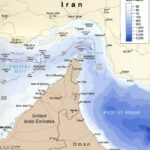
Recent attacks on commercial shipping in and around the Strait of Hormuz are beginning to affect global energy supply chains, highlighting the vulnerability of one of the world’s most important maritime chokepoints. The escalation follows statements from Iran’s new Supreme Leader, Mojtaba Khamenei, indicating that the waterway should remain closed as a strategic pressure point amid the ongoing regional conflict.
Several commercial vessels have been struck in recent days. Among the most notable incidents was a missile strike on the Thai-flagged oil tanker Mayuree Naree, which was hit near the engine room while transiting the Strait of Hormuz. The strike triggered a fire aboard the vessel, and several crew members were temporarily trapped before rescue operations by the Omani navy secured the remaining crew.
In another incident, a crude oil tanker owned by the New Jersey-based company Safesea Group and sailing under a Marshall Islands flag, the Safesea Vishnu, was struck by a projectile in the Persian Gulf. Video circulated by Iranian media showed a large explosion on the vessel before it was engulfed in flames. According to maritime authorities, the crew was safely evacuated.
Additional attacks have been reported on vessels in Iraqi waters and elsewhere in the Gulf. Security firms and port officials say explosive-laden boats believed to be operated by Iranian forces attacked two fuel tankers near Iraqi oil terminals, setting them ablaze and killing at least one crew member. Other vessels, including a Japan-flagged container ship and a Greek-owned bulk carrier, sustained damage from projectiles or shrapnel.
The Strait of Hormuz is one of the most critical corridors in the global energy supply chain. Approximately 20 percent of global oil supply moves through this narrow waterway, which connects the Persian Gulf to the Arabian Sea. Energy exports from Saudi Arabia, Iraq, Kuwait, Qatar, and the United Arab Emirates rely heavily on this route to reach markets in Asia, Europe, and North America.
Even limited disruption in the corridor can influence global energy markets. Oil prices briefly moved above $100 per barrel following the latest attacks before easing somewhat after governments announced releases from strategic petroleum reserves. The United States and several other countries have agreed to release roughly 400 million barrels of oil from reserves to stabilize supply if shipping disruptions persist.
Operational risk in the region is now a central concern for shipping companies and insurers. Maritime insurers have warned that they may suspend coverage for vessels transiting parts of the Gulf due to the heightened risk environment. Without insurance, most tanker operators cannot legally or financially justify entering the region.
The consequences extend beyond oil markets. Energy costs remain a foundational input for global logistics networks. Ocean carriers, trucking fleets, air cargo providers, and rail operations all rely heavily on fuel, meaning sustained price increases can quickly translate into higher freight rates and logistics costs.
Industrial supply chains are also sensitive to energy volatility. Petroleum-based inputs are widely used in plastics, chemicals, fertilizers, packaging materials, and synthetic textiles. As a result, disruptions in oil flows can influence production costs across a broad range of manufacturing sectors.
The situation also underscores the continued importance of physical chokepoints in global trade. Despite advances in supply chain visibility technologies and analytics platforms, major maritime corridors—including the Strait of Hormuz, the Suez Canal, and the Panama Canal—remain critical points where disruptions can have disproportionate global impact.
For supply chain organizations, geopolitical risk has become an increasingly important component of resilience planning. Energy price volatility, maritime security threats, and regional instability can quickly affect transportation costs, sourcing strategies, and inventory planning.
Military officials indicate that U.S. naval forces in the region are currently prioritizing efforts to counter missile and drone threats rather than escorting commercial shipping through the strait. As a result, the pace of tanker traffic and the availability of maritime insurance will be key indicators for supply chain leaders monitoring the situation.
While strategic petroleum reserve releases may help moderate short-term price spikes, the stability of shipping through the Strait of Hormuz will remain a central factor in determining whether the disruption remains contained or begins to influence broader global supply chain operations.
The post Strait of Hormuz Disruptions Raise Immediate Concerns for Global Supply Chains appeared first on Logistics Viewpoints.