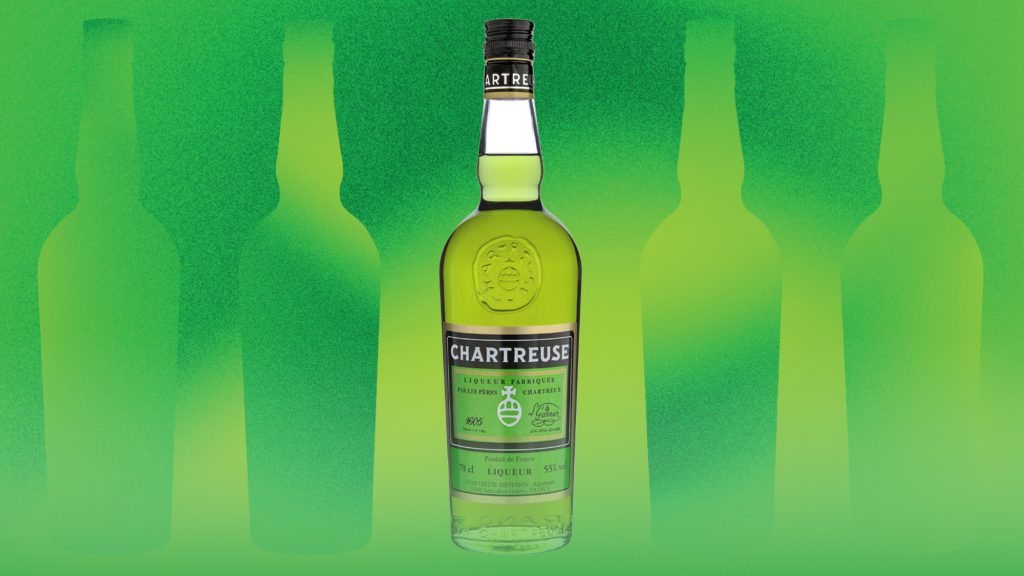
With its signature bright green color and easy-to-read label, a bottle of Chartreuse isn’t hard to spot on liquor store shelves or bar racks. That is, if it’s even there. In 2021, the Carthusian monks who craft the herbal liqueur in the French Alps instituted a soft production cap without an official announcement, leaving devotees confused about the shortage — and without their go-to herbal liqueur. But as the supply pulled back in recent years, demand kept growing. After all, Chartreuse is the base liquor in a number of standardized cocktails like the Last Word and the Bijou.
Since Chartreuse left a self-inflicted void in its own category, some domestic distilleries have added a verdant liqueur to their portfolio, and other French brands have infiltrated the U.S. market for the first time with their dupes. Since the drought shows no sign of abating, here are seven substitutes for Chartreuse.
Dolin Génépy Le Chamois
If yellow and green Chartreuse are siblings, Dolin’s Génépy Le Chamois is their cousin. Dolin also operates out of the Alps, where it sources locally grown flora for its liqueur. Génépy — a native Alpine herb — is the primary ingredient in Chartreuse and the eponymous herb used in Dolin’s 45 percent ABV version, giving both their signature rich, sweet herbaceousness. This take on a green herbal spirit is refreshing, complete with an anise-forward finish. As it comes from the same region and features the same base ingredients, Dolin Génépy Le Chamois is a common alternative for Chartreuse
Fontbonne 1874 Herbal Liqueur
Fontbonne debuted its products in the U.S. in 2024 amid the Chartreuse shortage, and among them is this subtle, elegant stand-in for Chartreuse hailing from Dijon. Fontbonne’s herbal spirit includes 26 botanicals like tarragon, fennel, and pine, infusing it with a pale-green color and earth-forward taste profile. Other plants and spices add floral notes, such as lavender, elderflower, and chamomile. Fontbonne’s herbal liqueur is bright and quaffable, so using it will lighten up any Chartreuse-based cocktail.
Forthave Spirits Green
The Brooklyn-based, small-batch producer Forthave Spirits added an herbal liqueur called simply “Green” to its portfolio of color-coded spirits in October. Distillations of 30 herbs and macerations of 20 botanicals — including lemon balm, fennel, thyme, and hyssop — comprise the spirit, lending peppery, vegetal, and citrus notes. Its olive-green color comes from the juice of sorghum, a grassy grain, sourced from the farm at Blue Hill at Stone Barns — the famed two-Michelin-starred restaurant in the Hudson Valley. The liqueur comes in at 44 percent ABV and is currently offered in 750- and 350-milliliter sizes.
Faccia Brutto Centerbe
Faccia Brutto’s Brooklyn-distilled Centerbe is the result of a two-pronged maceration process. Dried herbs like lemon balm, anise hyssop, and coriander steep in a neutral grain spirit for one week, followed by an overnight infusion of color-imbuing fresh herbs like tarragon and bay leaves. The final product is a complex, full-bodied take on the Alpine liqueur with a deep emerald hue and 45 percent ABV. Centerbe works as a swap for Chartreuse in the Bijou, as its complexity complements the syrupy sweet vermouth.
Luxardo Del Santo Herbal Liqueur
Luxardo may be known for its Maraschino liqueur and cherries, but it also produces an Italian green herbal spirit called Del Santo. The plant Achillea moscata — which grows on the Swiss and Italian Alps and is used in many grappas — is at Del Santo’s forefront. Other botanicals like mace, cinnamon, and clove offer nuances of spice to balance out the earthy notes. The liqueur is particularly fit for a Last Word, where its robust spice flavors balance out the lime juice’s acidity.
Bénédictine
A popular French herbal liqueur in its own right, Bénédictine is commonly featured in classic cocktails including the Vieux Carré. Though it is commonly likened to Chartreuse in general, its honey-forward flavor and light color make it a more suitable replacement for yellow Chartreuse in particular. While Bénédictine, crafted in Normandy, lacks the pine-forward notes typical of Alpine liqueurs, using gin makes up for it in cocktails like the Alaska — usually made with yellow Chartreuse but perfect for a Bénédictine substitution.
Strega
Another surrogate for yellow Chartreuse, Strega hails from Italy and has a bold yellow hue. Mint and pine flavor this sweet spirit, which is made with fennel, saffron, and other botanicals. Though Strega is commonly consumed neat, it can serve as a Chartreuse alternative in cocktails where drinkers might want a zippier taste. In the Naked and Famous, substituting Strega for yellow Chartreuse introduces a bright kick that balances out the mezcal.
The article 7 Alternatives to Chartreuse, the Perpetually Hard-to-Find Green Liqueur appeared first on VinePair.